The $10,000 2011 Question: How Much Better Can a Pistol Really Get?
At some point, every serious gear enthusiast runs into the same uncomfortable question: how much better can a pistol really get?
At some point, every serious gear enthusiast runs into the same uncomfortable question: how much better can a pistol really get?
Not theoretically. Not on a specification sheet. Not because a manufacturer says a new model is "competition ready."
I mean in actual use.
How much performance can you buy before the improvements become difficult to see, difficult to measure, or simply irrelevant to the way you shoot?
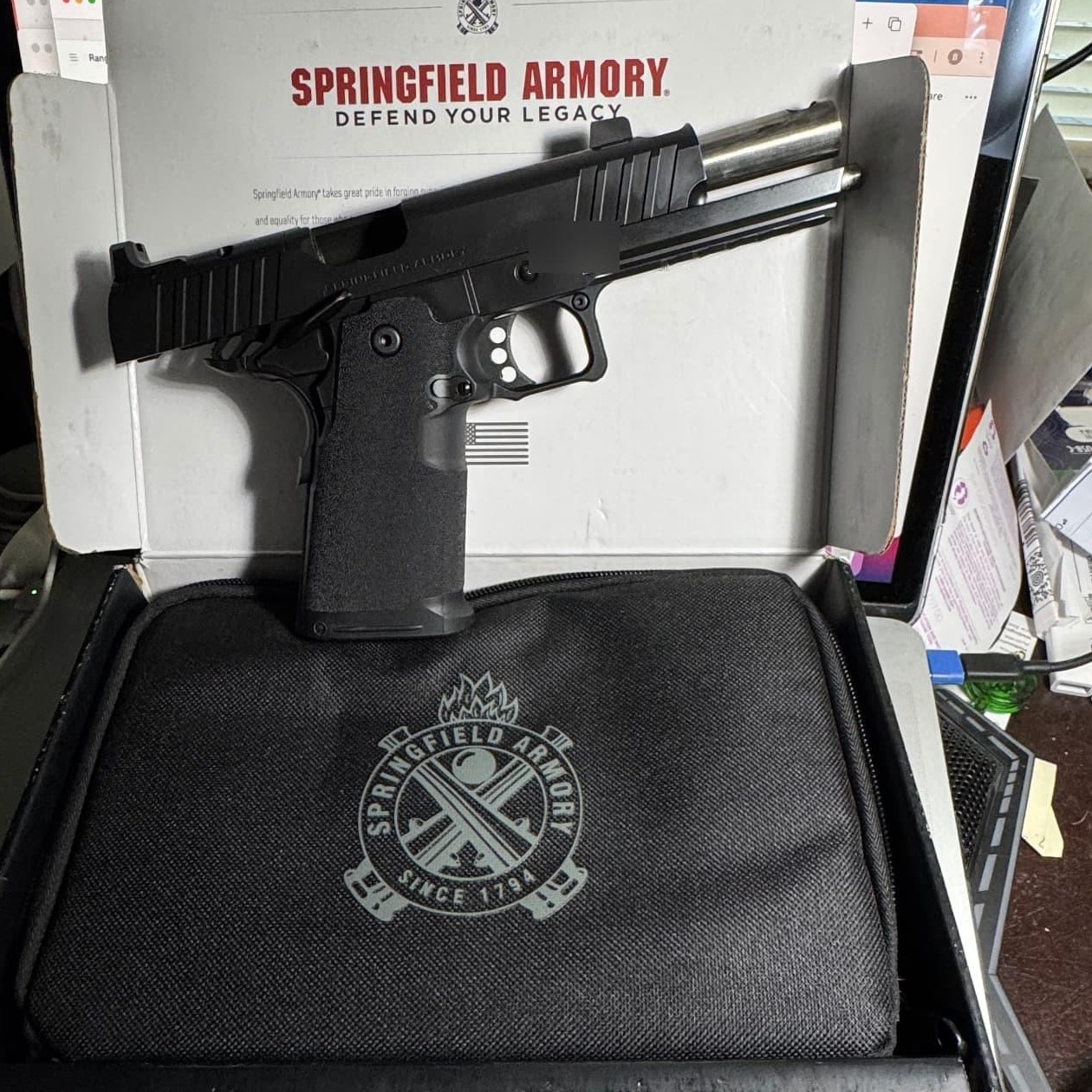
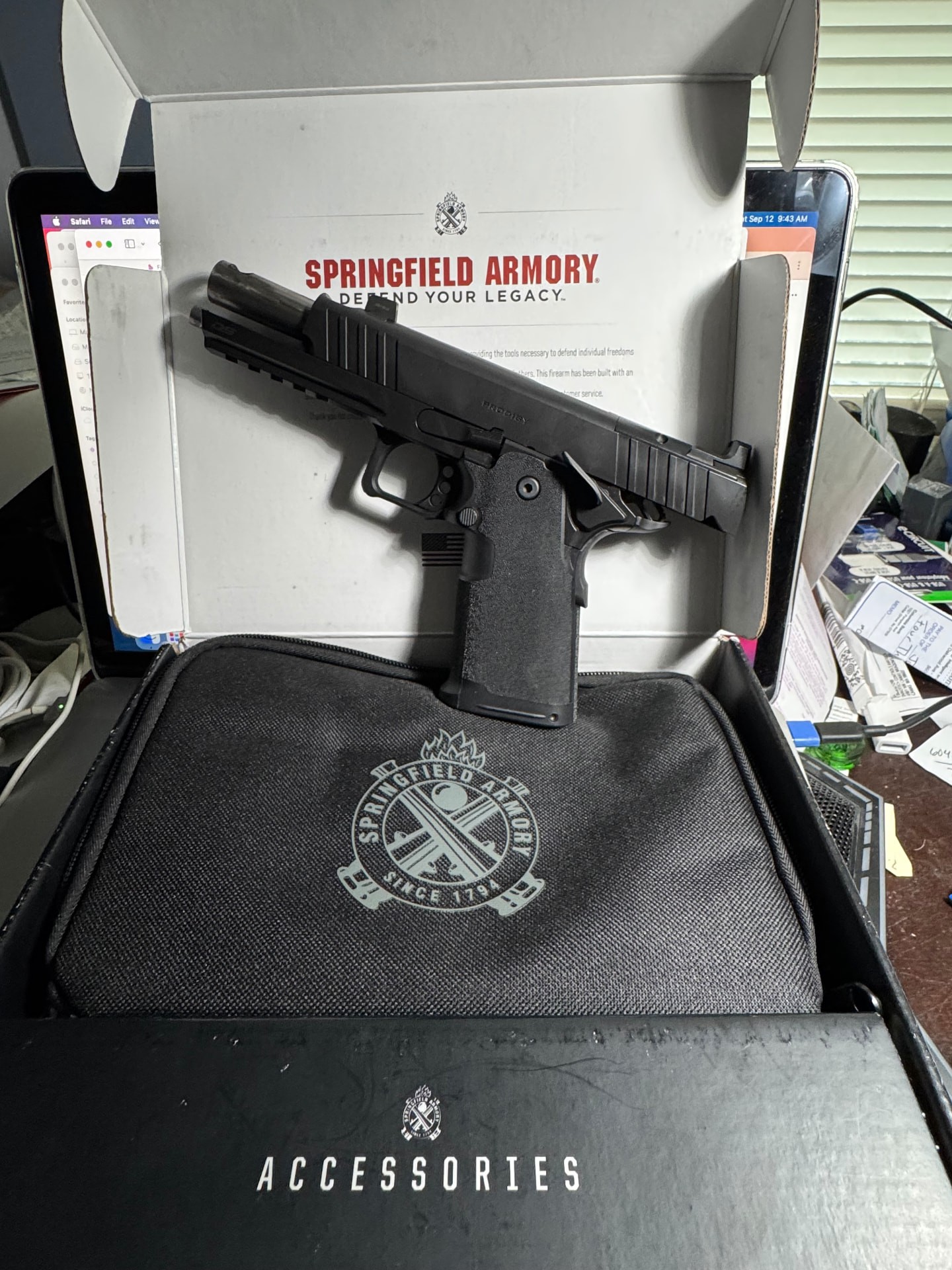
That question has been on my mind while working with my Springfield Prodigy 5" DS Comp.
The Prodigy is not a $10,000 custom 2011. It is not built with the same level of hand fitting, finishing, or boutique attention as the most expensive pistols in the category. But it is also not a basic service pistol. It is a serious, feature-rich double-stack 1911-style pistol that occupies an interesting place in the market.
That makes it a useful test case.
If a pistol costing a fraction of a high-end custom 2011 can be mechanically reliable, shoot accurately, track well and accept a modern competition optic, how much of the performance gap is actually left?
The expensive end of the 2011 market
There is no shortage of impressive pistols at the top of the 2011 market.
Custom and semi-custom builders offer pistols with extremely refined triggers, carefully fitted slides and frames, hand-fitted barrels, tuned ignition systems, premium coatings and extensive attention to detail.
Some of these pistols cost several thousand dollars. Others approach or exceed $10,000 depending on configuration, options and availability.
The appeal is easy to understand.
A high-end 2011 can offer:
Exceptional trigger quality
Very tight and consistent slide-to-frame fit
Carefully fitted barrels and bushings
Highly refined recoil systems
Premium small parts
Excellent finishing and coating work
Detailed hand fitting
A level of consistency that comes from extensive inspection and individual attention
Those are real advantages.
The question is not whether an expensive pistol can be better. It can.
The more interesting question is how much of that improvement translates into practical performance for an individual shooter.
What does the Prodigy actually give you?
The Springfield Prodigy brings many of the features that make the 2011 platform attractive without requiring a custom-pistol budget.
It offers a double-stack 1911-style design, a 5-inch barrel, a substantial frame, a competition-oriented configuration and an optic-ready slide. The compensated model adds another layer to the equation by attempting to reduce muzzle movement and improve tracking during rapid fire.
That is a lot of pistol for the money.
But price and performance are not always perfectly aligned.
A pistol can have excellent specifications and still need attention before it performs the way the owner expects. It can have a good trigger but inconsistent reliability. It can be accurate from a rest but difficult to shoot quickly. It can be mechanically sound but held back by an optic or sighting system that does not suit the shooter.
That is why I have been approaching the Prodigy as a system rather than simply judging the pistol out of the box.
Perfect Zero addressed the mechanical side of the equation
My Prodigy had a somewhat complicated beginning in my collection.
The pistol showed enough potential to keep working with, but it also had mechanical concerns that needed to be addressed. I sent it to Perfect Zero, where the pistol received attention intended to improve its mechanical performance and consistency.
That process matters because it removes one of the easiest excuses.
If the pistol is not running correctly, it is difficult to evaluate its accuracy, handling or practical potential. Mechanical problems can obscure everything else.
After the work was completed, the Prodigy came back running considerably better mechanically. That gave me a more useful starting point.
The pistol was no longer simply a project that needed to be made functional. It became a platform that could be evaluated more seriously.
But there was still another obvious issue.
The iron sights were not working well for me.
At the range, I was consistently shooting high-right. I could compensate for it, but that is not the same as having a sighting system that naturally supports the way I shoot. I had already decided that the pistol needed a red dot before I passed final judgment on what it could do.
That led to the next question: how much of the remaining performance gap was really the pistol, and how much was the sighting system?
The optic became part of the experiment
I ultimately chose the Cyelee Bull X Pro for the Prodigy because I wanted a large competition-style viewing window, a precise center dot and an optic that fit the role of the pistol.
The Bull X Pro uses a 34.5 x 26 mm window, approximately 1.36 x 1.02 inches. It has a 2 MOA center dot, a selectable outer circle, an RMR / 407C / 507C / 508T footprint, side-loading CR1632 battery access and a 7075-T6 aluminum housing.
Cyelee lists the optic at $290. I purchased mine through OpticsPlanet with an 18% discount. My price was $237.80 before tax and $253.53 total, and I received another $15 in OpticsPlanet Bonus Bucks.
That purchase is relevant to the larger question because the optic is part of the pistol's practical performance.
A pistol can be mechanically capable, but if the shooter struggles to find the dot, the window is too small, the reticle is difficult to see or the optic loses zero, the system is not performing at its potential.
The optic does not make the pistol better mechanically. It can, however, make the pistol easier to use effectively.
That distinction matters.
Where the expensive pistol may still win
It would be unrealistic to pretend that a production pistol can automatically match a carefully built $10,000 2011 in every category.
The expensive pistol may still have meaningful advantages.
The trigger may be cleaner and more consistent. The slide may feel smoother. The fit may remain tighter over time. The small parts may be more carefully selected and fitted. The pistol may have fewer rough edges, fewer compromises and a higher level of refinement throughout.
There is also the human element.
When a pistol is built specifically for one shooter, with the grip, trigger, controls, sights and balance selected around that person's preferences, it can feel more natural. That confidence has value, even when it is difficult to quantify.
A high-end pistol may also arrive with a level of quality control that reduces the amount of sorting, tuning and troubleshooting required from the owner.
Those advantages are not imaginary.
But they do not automatically mean the expensive pistol will produce dramatically better results in every shooter's hands.
Where the gap may be smaller than expected
The practical performance gap can become surprisingly narrow when the less expensive pistol is mechanically sound and equipped correctly.
A shooter may notice the difference in trigger feel immediately. They may notice the difference in slide movement, fit or finish. But those differences do not always translate into a proportionate difference on the target.
At realistic defensive, training or local competition distances, the shooter remains a major part of the equation.
Grip consistency, visual processing, recoil management, trigger control, movement and decision-making can easily matter more than the difference between a very good trigger and an exceptional one.
That does not make the expensive pistol unnecessary. It means the expensive pistol may be solving a different problem.
For one shooter, the goal may be maximum refinement with no compromises. For another, the goal may be a reliable and capable platform that leaves more money available for ammunition, training, travel and range time.
The $10,000 question is really a value question
The title of this article is intentionally provocative, but the underlying issue is not simply whether a $10,000 pistol is worth $10,000.
The better question is: what are you buying with the additional money?
You may be buying measurable mechanical improvements. You may be buying consistency. You may be buying hand fitting, premium materials, better finishing and a more complete ownership experience. You may also be buying confidence, pride of ownership and the satisfaction of having exactly the pistol you wanted.
All of those things can be legitimate reasons to spend more.
But if the goal is simply to shoot tighter groups or run faster stages, the answer may not be as straightforward as the price difference suggests.
A $10,000 pistol does not eliminate the need for practice. It does not fix poor grip technique. It does not replace a proper zero. It does not make recoil disappear. It does not guarantee that the pistol will fit the shooter's preferences.
And a less expensive pistol does not automatically prevent a skilled shooter from performing well.
What I still need to find out
The Prodigy has now had its mechanical concerns addressed, and the sighting system is being upgraded to better match the role of the pistol. That gives me a more useful platform for evaluation.
The next step is range time.
I need to determine:
How accurately the pistol shoots from practical positions
How consistently it tracks during rapid fire
Whether the compensator produces a noticeable benefit
How well the Cyelee optic performs in actual use
Whether the pistol maintains zero
How reliable it remains across different ammunition
How much the trigger and overall handling affect my results
Whether the pistol feels predictable enough to build confidence in
Those answers will matter more than the price tag.
A pistol can be impressive on paper and disappointing in use. Another can be less refined but deliver excellent results because it fits the shooter, runs reliably and receives the attention it needs.
That is the real test.
So, how much better can a pistol really get?
The honest answer is that it depends on what "better" means.
A $10,000 2011 can be better finished, better fitted and more refined. It may offer a superior trigger, smoother operation and a level of consistency that justifies its price for the right buyer.
But a properly functioning production 2011-style pistol may already provide much of the capability most shooters can use.
The Springfield Prodigy does not need to be the best 2011 ever built to be worthwhile. It needs to run, shoot accurately, track predictably and give the shooter a platform that supports improvement.
Perfect Zero helped address the mechanical side. The Cyelee Bull X Pro is intended to remove the sighting system from the equation.
Now the range will decide how much performance is actually there.
Maybe the Prodigy will reveal clear limitations that justify moving to a much more expensive pistol.
Maybe it will show that the remaining gap is smaller than expected.
Either way, the answer will be more useful than a specification sheet or a price comparison.
We'll find out at the range.
Want to shoot instead of read?
If a note like this is part of how you're deciding what to buy, a firearm selection consultation covers the same ground with your hands on the gun. Private instruction and range sessions in Montclair and Northern New Jersey — beginner-friendly, one-on-one, and built around your goals rather than a course catalog.
Field Notes reflects personal experience and general product research. Firearms, ammunition and accessories should be used only in accordance with manufacturer instructions and all applicable laws. MyRangeBuddy content is not legal advice.